Helping users recover clarity in long AI conversations
2026
This project explores how long AI conversations could become easier to recover, navigate, and manage over time. The goal was not to redesign the AI model or introduce a completely new workspace. Instead, I focused on small interface-level interventions that could help users recover from drift, preserve important decisions, and explore alternatives without restarting the conversation.
- Role
- Product designer
- Focus
- AI UX, Conversation design, Context management, Interaction systems
- Deliverables
- Product framing, UX research, user flow, interaction design, UI design, prototyping
- Tools
- Figma, FigJam
Introduction
This project explores how long AI conversations could become easier to recover, navigate, and manage over time.
Instead of designing a new AI chat interface from scratch, I chose to build on top of the existing ChatGPT interface and mental model. The goal was to identify where the current experience already works, where it starts to break down in long conversations, and how lightweight interface improvements could reduce restart friction.
ChatGPT already contains some useful building blocks, such as branching from a message. However, these features are not always visible, contextual, or easy to manage once conversations become dense.
The concept focuses on three interaction patterns:
- Refine: adjust a specific AI output without adding more prompt noise;
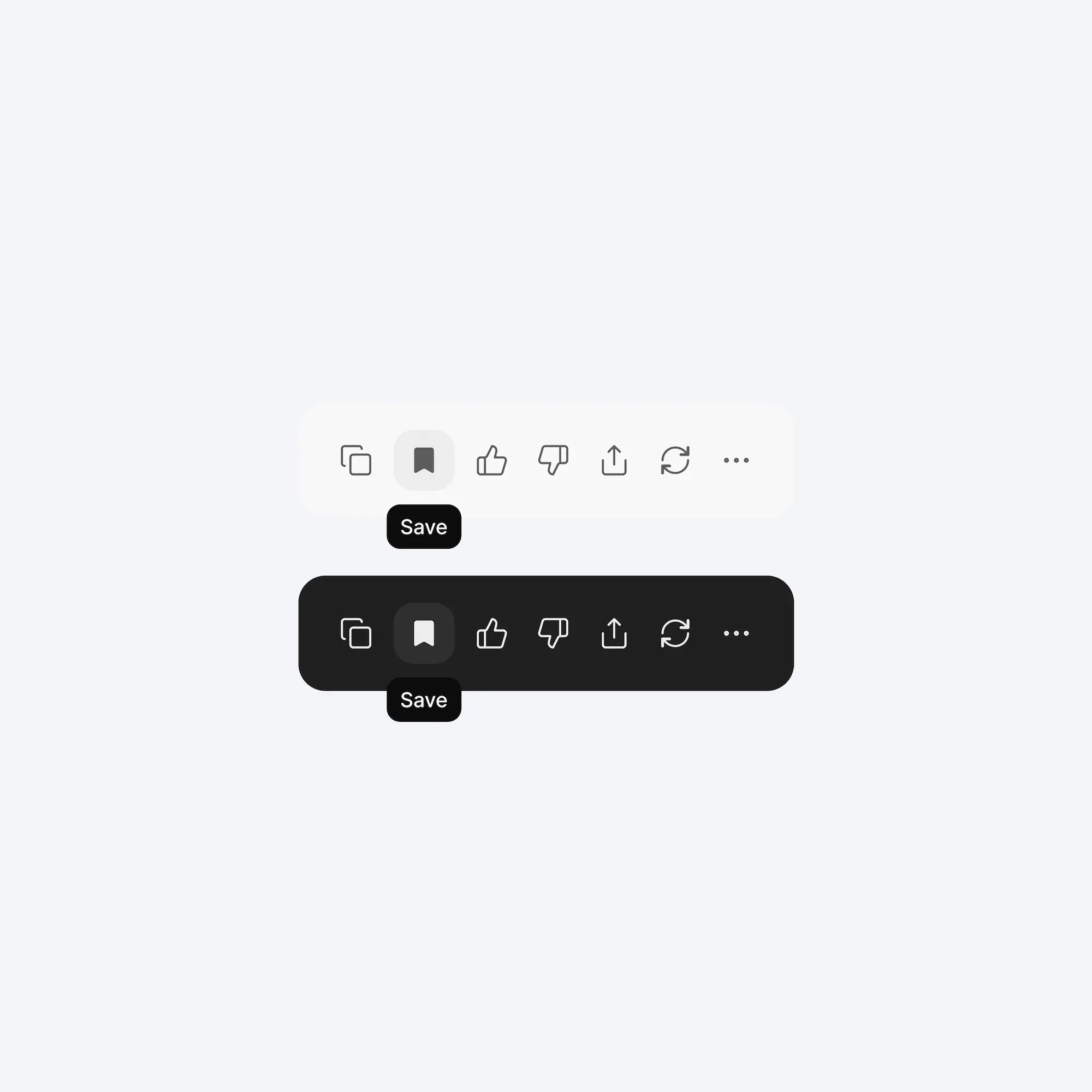
- Save: anchor important outputs so they do not disappear in scroll;
- Fork: separate alternative directions while keeping them connected to the original thread.
Problem Statement
Long AI conversations do not usually fail suddenly. They gradually lose clarity, alignment, and recoverability.
As a conversation grows, users test directions, refine outputs, reject ideas, clarify constraints, and make decisions. Over time, all of this accumulates in one continuous thread.
When the AI starts to drift, the user often has to scroll back, restate context, or start over entirely.
The problem is not only that the model may lose track of context. It is also that the interface gives users very few tools to manage that context as the conversation becomes denser.
When recovery feels harder than restarting, users restart.
What research revealed
To understand this pattern, I ran a lightweight exploratory research sprint combining community signal analysis, hands-on experimentation with long AI conversations, informal interviews, and secondary research around multi-turn degradation and conversational drift.
A recurring pattern emerged: users do not experience breakdown as one dramatic failure. They experience it as gradual misalignment.
Common friction points included:
- important decisions getting buried after 25+ messages;
- alternatives mixing together in the same linear thread;
- small refinements requiring additional prompts, which adds more noise;
- branches feeling detached from the original conversation;
- users restarting because repairing the thread feels too costly.
Product Hypothesis
If users can refine outputs locally, anchor key decisions, and separate alternative directions inside the conversation, then long AI threads will feel easier to recover and manage over time.
This hypothesis shaped the solution around three recovery moments:
- when a response is almost right but needs adjustment;
- when an output becomes important enough to revisit later;
- when exploration diverges into an alternative direction.
Rather than adding one heavy feature, the solution uses lightweight structural support at the moment where friction appears.
Solution
Make long conversations feel less like endless scroll and more like recoverable workspaces.
The concept keeps the familiar ChatGPT timeline, but adds lightweight and contextual structure around it: local refinement for small corrections, saved outputs for key decisions, and conversation-local branches for alternative directions.
The product is designed around one recovery loop:
Notice drift → recover locally → preserve context → continue without restarting
Diapositive 1 sur 3
Main User Flow
The main flow follows a user working through a long exploratory conversation with an AI.
At first, the conversation feels aligned. The user explores ideas, adds constraints, compares directions, and iterates on outputs. After many turns, the thread becomes harder to manage: some decisions are buried, alternative directions are mixed together, and small corrections start adding more messages instead of clarifying the conversation.
The user can then recover in three ways.
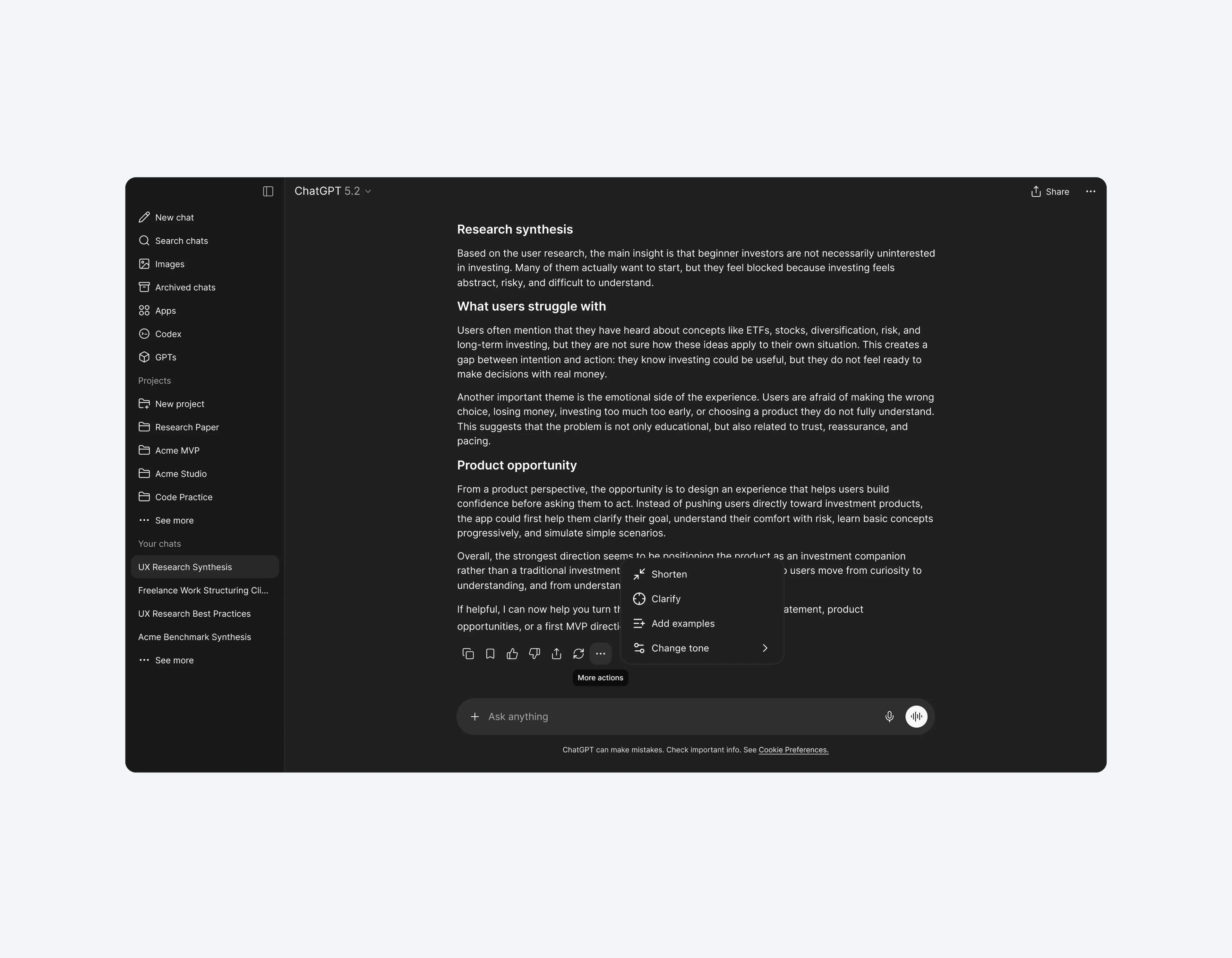
Flow 01: Refine an answer locally
The user receives an answer that is close, but not quite right. Maybe it is too long, too generic, missing examples, or slightly off in tone.
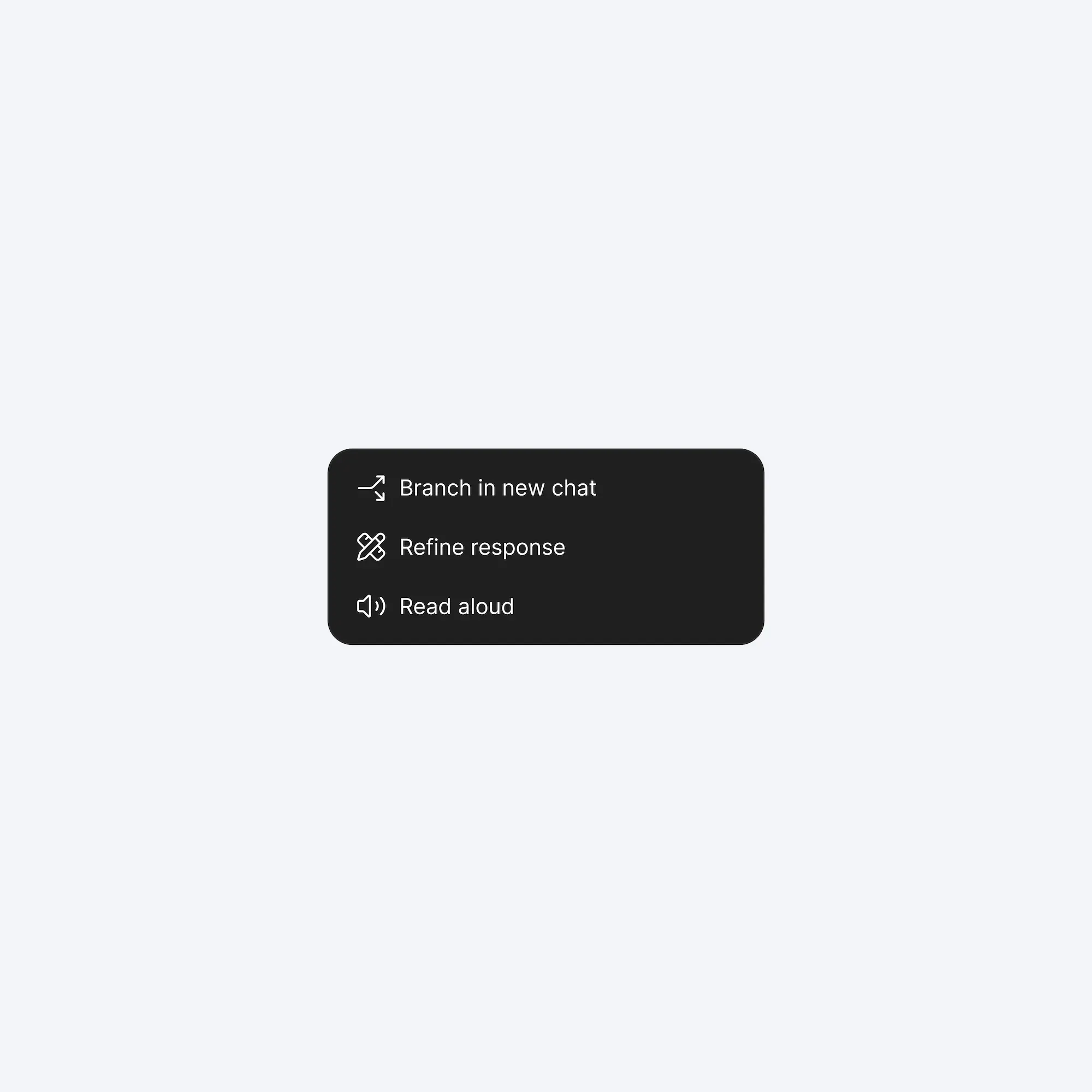
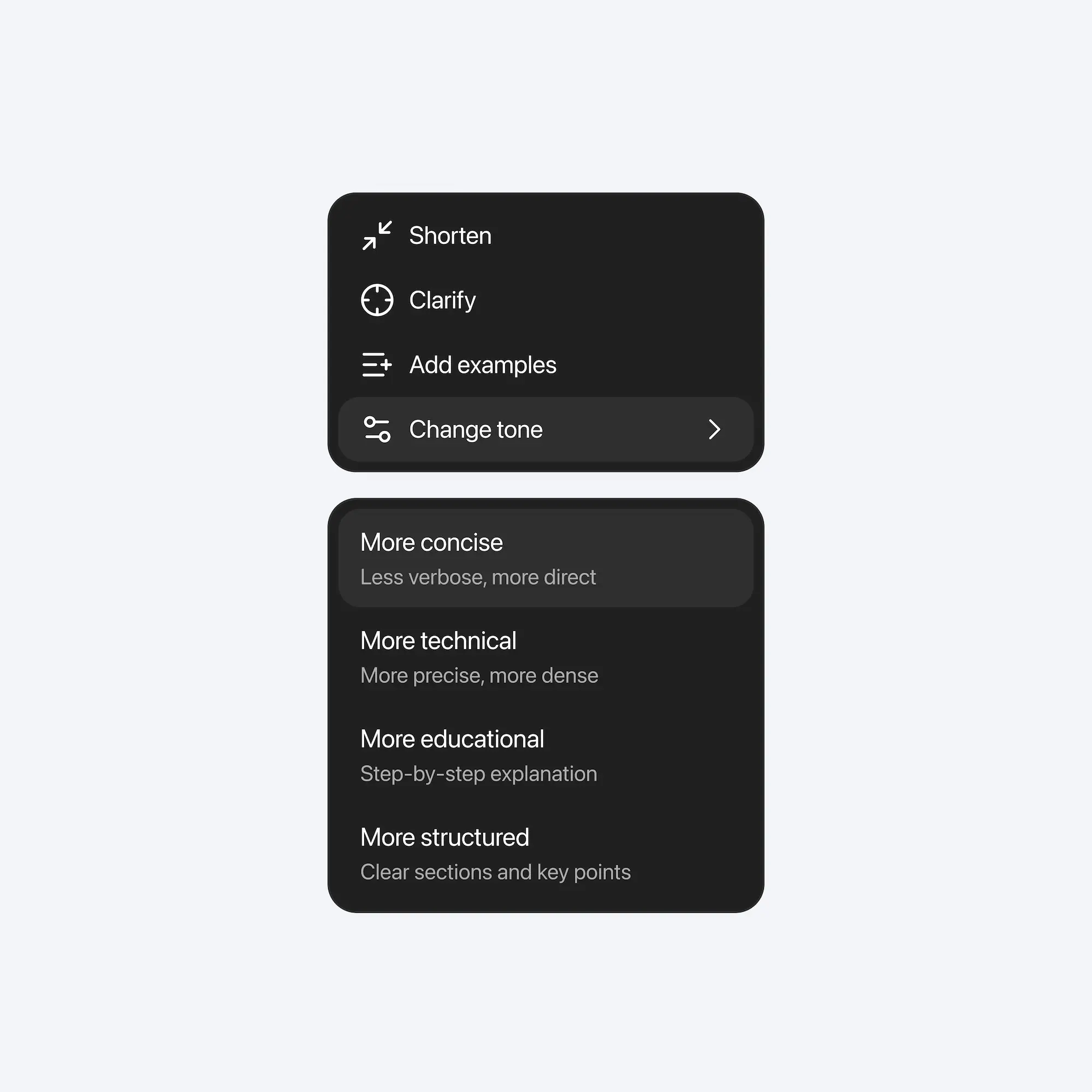
Instead of writing another prompt, the user opens the action menu on that specific AI output and selects Refine.
A small refinement menu appears with intent-based options such as:
- Shorten;
- Clarify;
- Add examples;
- Change tone.
The system generates a refined version and shows it next to the original. The user can compare both versions and choose which one becomes active.
Only the selected version contributes to future context. This keeps small corrections local instead of adding more messages to the thread.
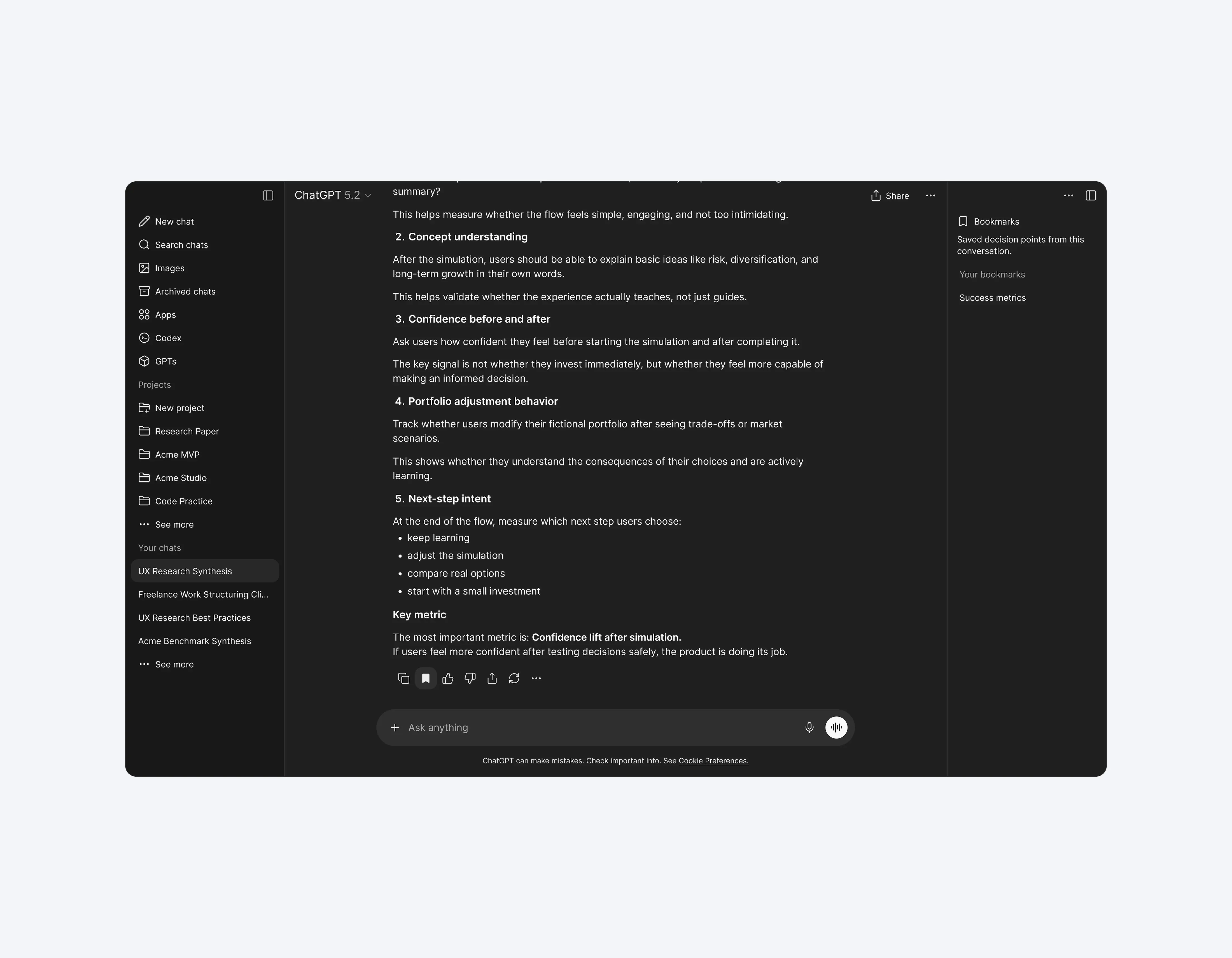
Flow 02: Save an important output
As the conversation grows, some AI outputs become reference points: a final direction, a key constraint, a strong draft, or a decision the user wants to return to later.
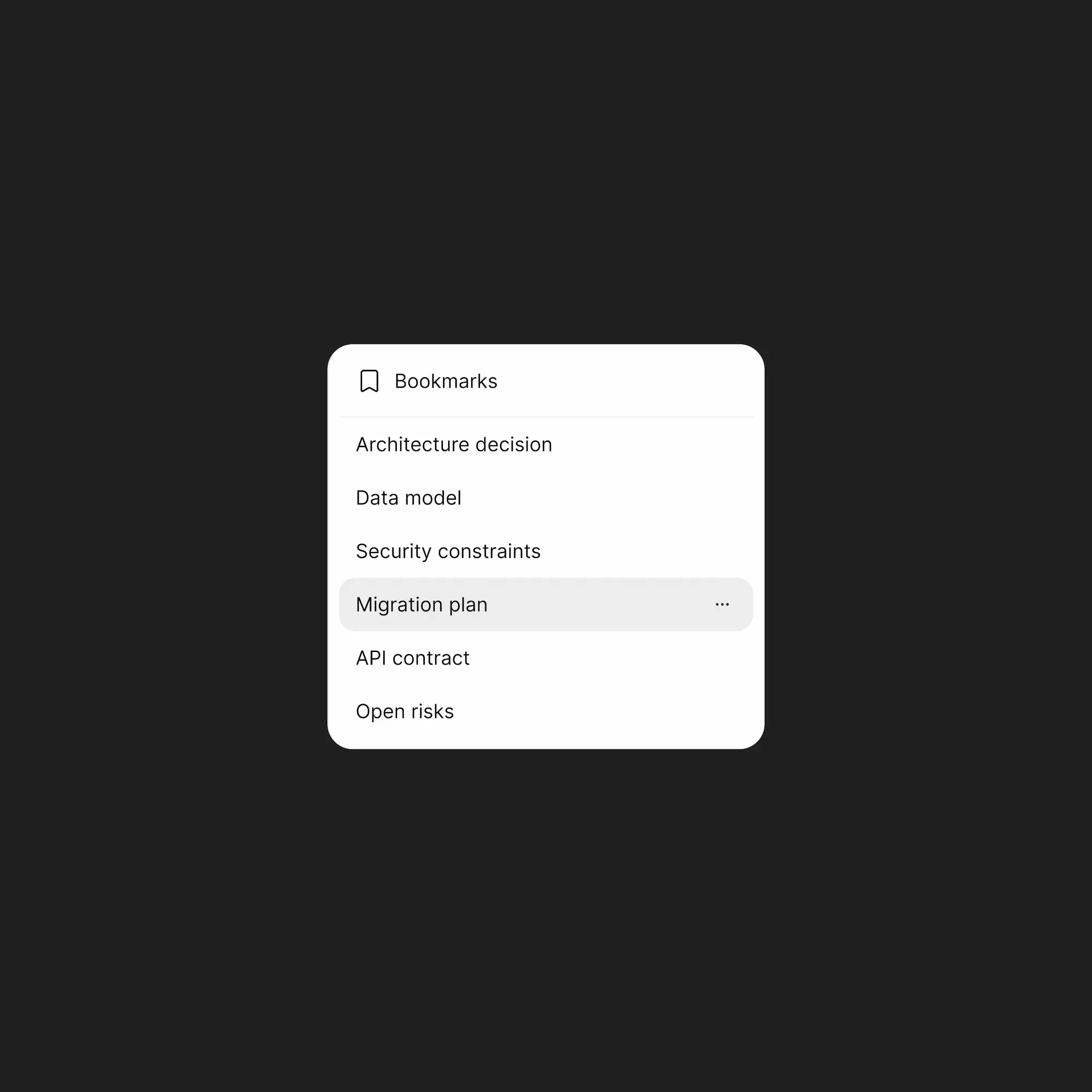
The user clicks Save on an AI output. A conversation-local saved items panel appears and stores the output as a navigable anchor. The system can generate a default label, while the user can rename or remove it if needed.
Later, the user can click the saved item to jump back to the exact output. This reduces the need to scroll through a long thread to recover a key decision.
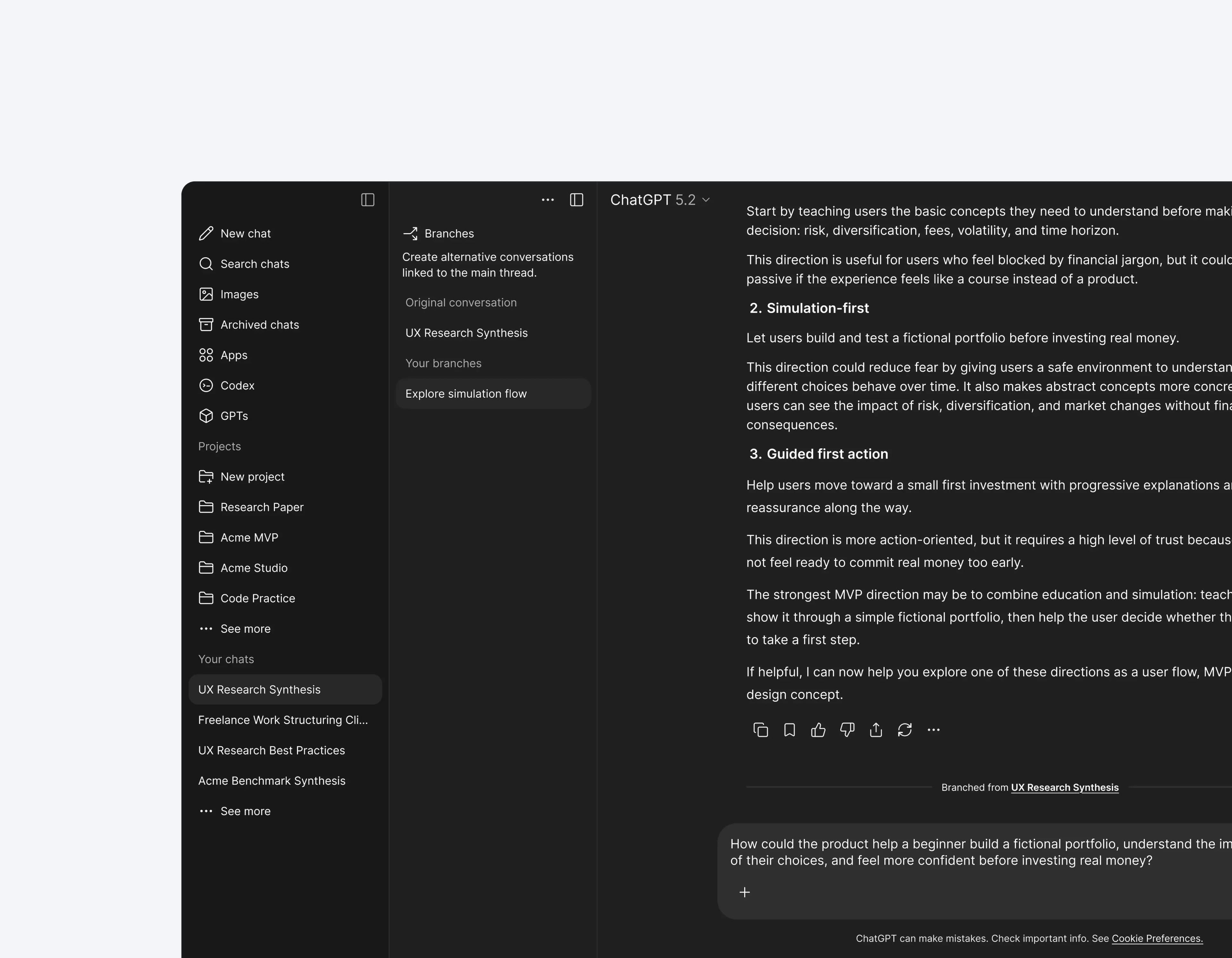
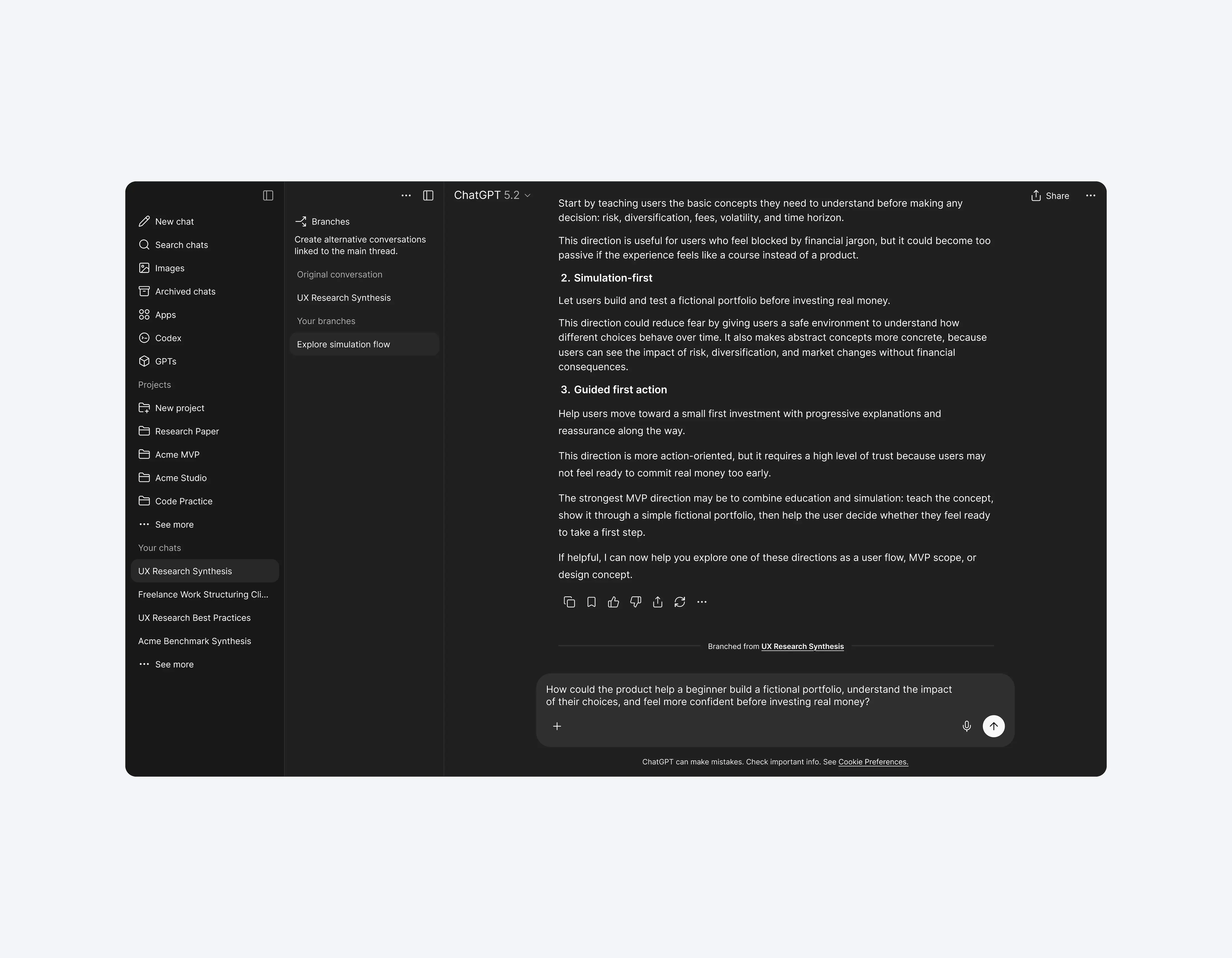
Flow 03: Fork into an alternative direction
When the user wants to explore another direction, they can fork from a specific message.
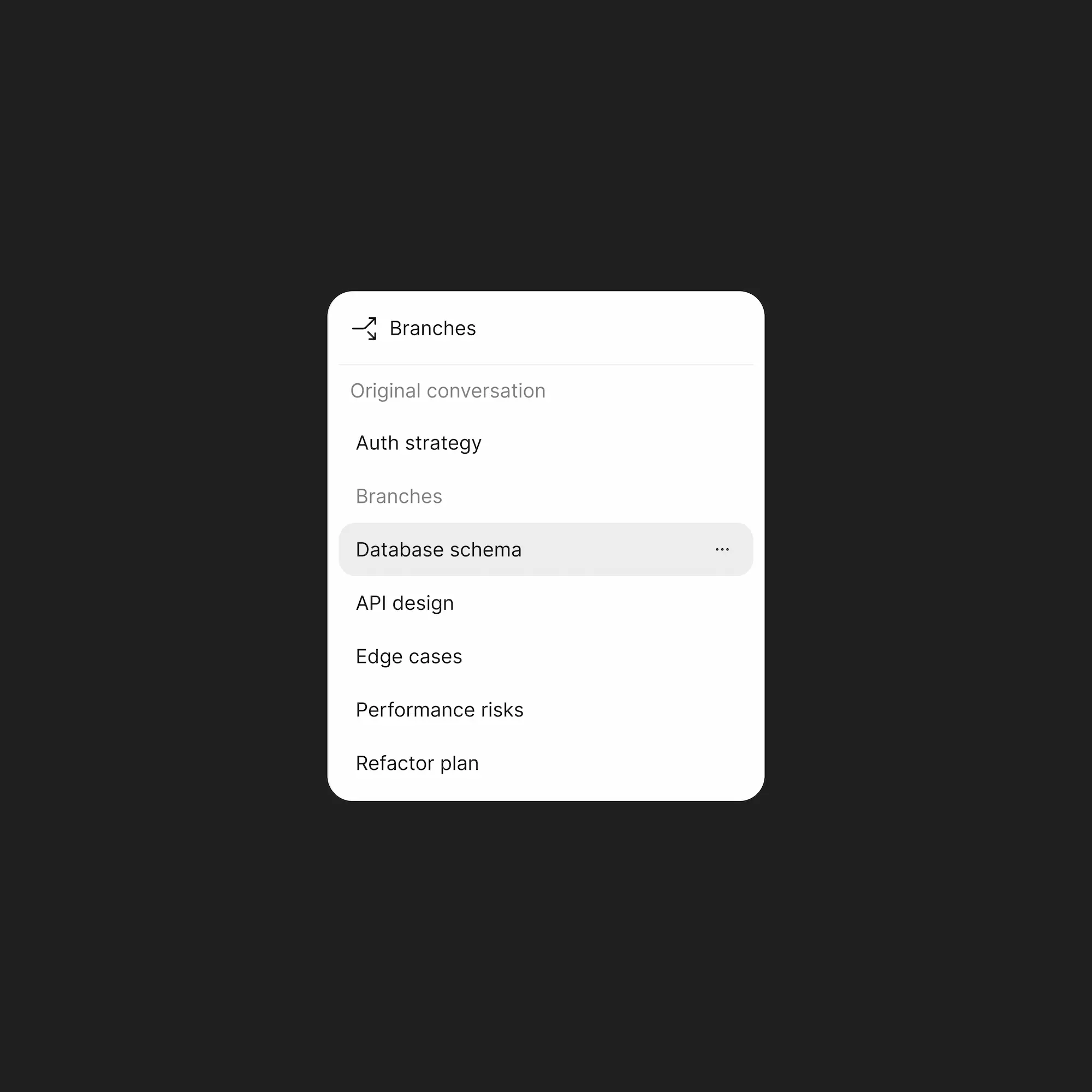
Branching already exists in ChatGPT, but it can feel disconnected because branches are mostly managed from the global sidebar. In long exploratory work, this makes it harder to understand how branches relate to the original thread.
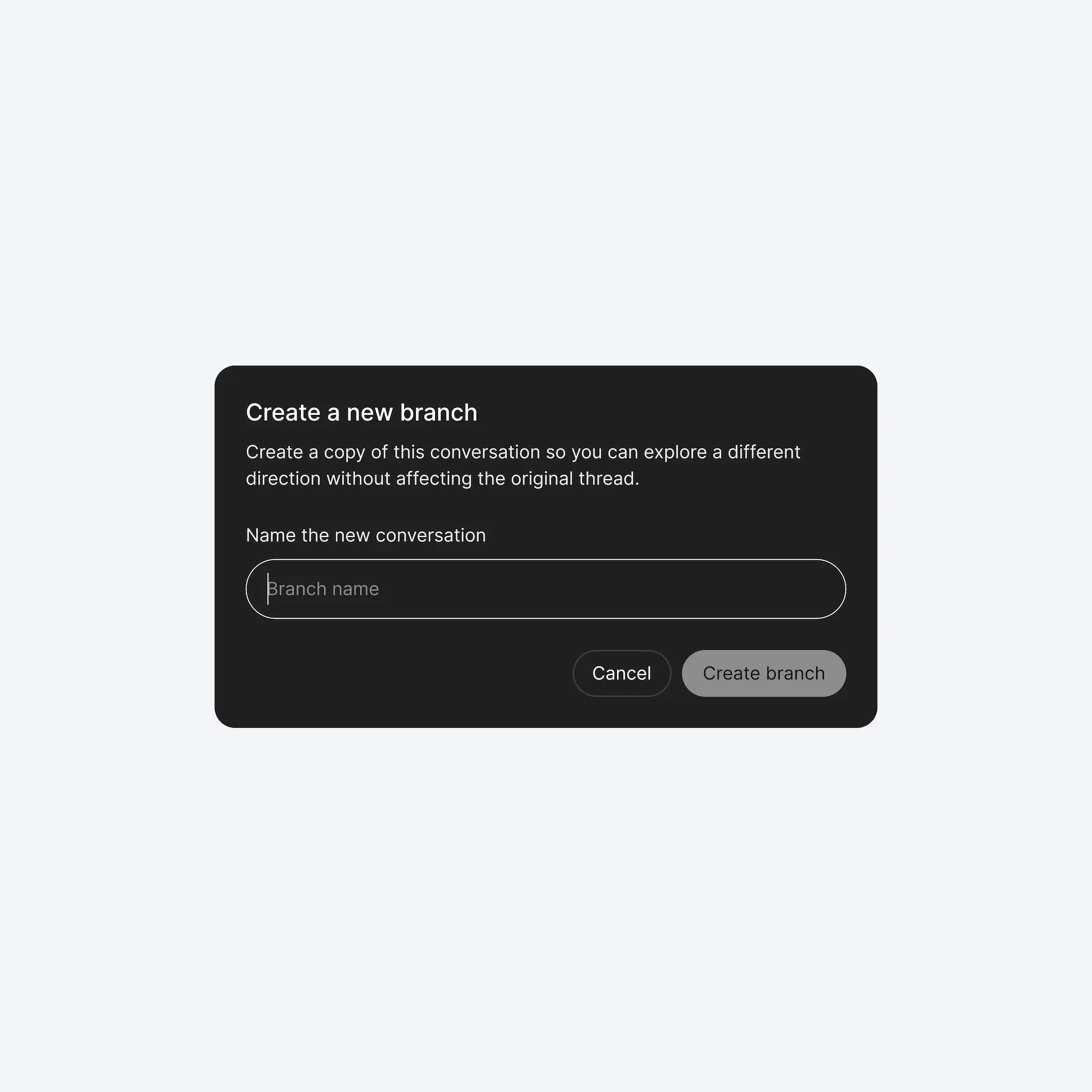
In this concept, after the user chooses to fork, they are prompted to name the branch immediately. A local branch panel then appears inside the conversation, showing the main thread and related branches in context.
The new branch inherits the conversation history up to the fork point, then evolves independently. This allows users to explore alternatives without losing the original direction or starting over from memory.
Key design decision
The goal was not to replace chat with a graph, tree, or project workspace.
Chat works well for short and medium interactions, and users already understand the timeline model. Replacing it entirely would add too much complexity.
Design choice → Keep the linear conversation as the default, and add structure only when the thread becomes harder to manage.
Trade-off → This is less powerful than a full graph-based workspace, but it keeps the experience familiar and avoids overwhelming users.
Long conversations behave less like simple chats and more like lightweight workspaces. But adding too much structure too early would make the product feel heavy.
Design choice → Refine, Save, and Fork are contextual actions. Side panels appear only after the user creates saved items or branches.
Trade-off → This keeps the default experience simple, but makes discoverability important. The interface must show these options clearly enough without making every message feel overloaded.
In current chat interfaces, correcting an answer usually means writing another prompt. This works, but it adds more messages and can increase context noise.
Design choice → Refine happens at the output level. The user selects an intent, compares versions, and chooses the active one.
Trade-off → This introduces version awareness, which adds slight cognitive load. To keep it simple, only one version can be active at a time.
The goal of Save is not to create a global knowledge base or note-taking product.
Design choice → Saved outputs are scoped to the current conversation and act as navigation anchors.
Trade-off → This limits the feature’s power, but keeps it lightweight and focused on reducing scroll and retrieval friction.
Branching is useful, but if related branches only live in the global sidebar, they can feel detached from the conversation that created them.
Design choice → Show related branches in a local conversation panel, while preserving the existing branch behavior.
Trade-off → A local branch panel adds visual weight. To reduce this, it appears only when branches exist and remains collapsible.
Designed impact
The concept is designed to help users move from:
“This thread is getting messy.” → “I can recover the part that matters.” → “I can continue without starting over.”
The designed impact focuses on reducing recovery cost in long conversations:
- fewer restarts when conversations exceed 25+ messages;
- fewer follow-up prompts needed for small corrections;
- faster navigation back to key decisions;
- clearer separation between alternative directions;
- stronger user control over what becomes active context;
- higher confidence that the conversation can be repaired instead of abandoned.
Success would not mean eliminating drift entirely. Success would mean making drift easier to notice, contain, and recover from.
Potential metrics:
- restart rate after long conversations;
- refine usage vs manual re-prompting;
- time to locate a previous key output;
- save usage frequency;
- branch usage vs starting a new chat;
- perceived control in post-session feedback.
What I would test next
If I continued the project, I would test the prototype with heavy AI users working on a structured long-task scenario of 25+ turns.
I would focus on three questions:
- Do users understand when to use Refine, Save, or Fork?
- Do these interventions reduce the need to restart?
- Does local refinement reduce manual re-prompting?
- Does the added structure reduce friction more than it adds complexity?